

For most homeowners, the roof is a classic example of “out of sight, out of mind.” It sits high above our daily activities, silently shielding our families and belongings from the elements. However, this architectural indifference can be a costly mistake. A roof does not simply fail overnight; it sends out subtle signals—distress calls that, if heard early enough, can save you thousands of dollars in secondary water damage and structural repairs. Understanding these signs is the difference between a simple maintenance task and a total financial emergency. This guide explores the most common indicators that your home’s primary defense system is compromised and that it is time to consult with a professional to ensure your sanctuary remains secure.
Noticing Missing or Damaged Shingles After Storms
The most obvious sign of roof distress often occurs after a significant weather event. High winds, hail, and heavy rain act as a stress test for your shingles. If you walk the perimeter of your home and see shingles lying in the yard, or if you look up and see “bald spots” where the dark underlayment is exposed, your roof’s integrity has been breached. Each missing shingle is an open invitation for water to seep into the wooden decking below.
When the damage is widespread, it is often more cost-effective to look into a local roof replacement rather than chasing individual leaks with patches. Modern roofing systems are designed to work as a cohesive unit; when a significant portion of that unit is stripped away by a storm, the remaining shingles are often weakened at their seal points. A professional assessment can determine if the wind uplift has compromised the entire slope, making a full replacement the only way to guarantee future safety and maintain your manufacturer’s warranty.
Seeing Loose or Warped Exterior Panels Around the Roofline
A roof does not exist in a vacuum; it is part of a complex “envelope” that includes your gutters, soffits, and walls. Often, signs of roofing failure manifest at the transition points where the roof meets the vertical surfaces of the house. If you notice that the panels directly beneath your eaves are beginning to buckle, rot, or pull away, it is a sign that water is not being diverted correctly.
In these cases, the problem might be a combination of roofing and exterior cladding issues. Consulting with siding contractors can help identify if the flashing—the metal strips that bridge the gap between your roof and walls—has failed. When flashing fails, water runs behind the siding instead of over it, leading to hidden rot in the wall studs. Addressing these “edge cases” early prevents the moisture from migrating deep into the home’s skeleton, where repairs become significantly more invasive.
Finding Granules or Roofing Debris Around Your Property
As asphalt shingles age, they begin to shed their protective outer layer. These granules serve a vital purpose: they protect the underlying bitumen from the sun’s harsh ultraviolet (UV) rays. If you find what looks like coarse black sand in your gutters or at the base of your downspouts, your shingles are effectively “balding.” Once the granules are gone, the asphalt becomes brittle, cracks, and eventually fails.
While you can find basic repair materials at a roofing supply store, the presence of heavy granulation is usually a sign of systemic wear rather than a localized problem. It indicates that the shingles have reached a level of brittleness where they can no longer expand and contract with the temperature. If you can see “shiny” or smooth patches on your shingles from the ground, the protective lifespan of the material has been exhausted, and the roof is now highly susceptible to leaks.
Observing Persistent Leaks or Water Stains Inside the Home
The most dreaded sign of roofing failure is the appearance of a brown, circular stain on your ceiling or a steady drip during a storm. By the time water reaches your living space, it has already traveled through the shingles, the underlayment, the wooden decking, and the attic insulation. A leak is rarely a “new” problem; it is usually the final stage of a long-term failure.
Identifying the source of a leak is notoriously difficult because water follows the path of least resistance, often entering at one point and traveling down a rafter before dripping onto the ceiling ten feet away. This is why you need a local roofing contractor with the experience to perform a “water test” or use infrared thermography to trace the moisture back to its origin. Ignoring a small stain is a gamble; mold can begin to grow in the damp insulation within 48 hours, leading to air quality issues that affect the entire household.
Spotting Sagging Areas Along the Roof Structure
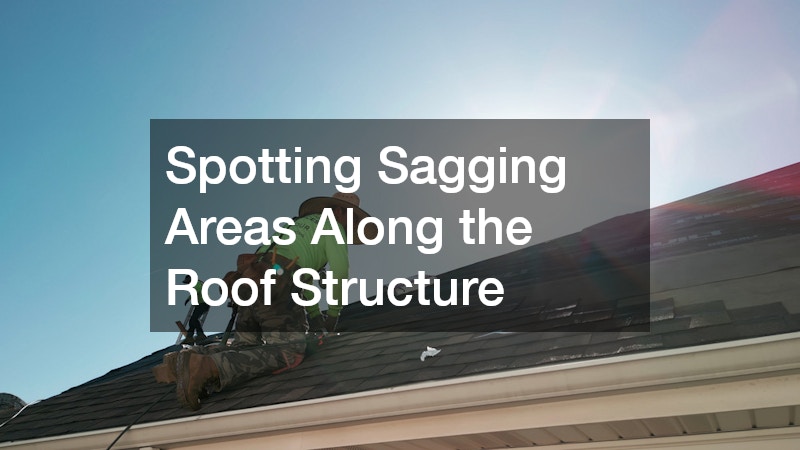
A roofline should be straight and true. If you step back from your house and notice a dip, a curve, or a “swayback” appearance to the ridgepole or the slopes, you are looking at a potential structural emergency. Sagging is often caused by long-term water damage that has softened the rafters or the plywood decking, but it can also be a sign of excessive weight from too many layers of old roofing.
When you see these undulations, you must call local residential roofers immediately for a structural evaluation. A sagging roof is at risk of collapse, especially under the added weight of snow or during high-pressure wind events. In many cases, the decking will need to be stripped and the rafters reinforced before a new roof can be installed. This is not a cosmetic issue; it is a fundamental failure of the home’s “bones” that requires professional engineering and heavy-duty repair.
Discovering Mold, Moss, or Algae Growth on the Roof
While a bit of moss might look charming on a cottage in the woods, it is a death sentence for a modern roof. Moss acts like a sponge, holding moisture against the shingles and roots into the matting. Similarly, black streaks—often mistaken for dirt—are actually a type of hardy algae called Gloeocapsa magma that feeds on the limestone filler in asphalt shingles.
Professional roofing services can treat these biological growths, but their presence often indicates that the roof is staying damp for too long, likely due to overhanging trees or poor drainage. If left untreated, the moss will lift the edges of the shingles, allowing wind-driven rain to get underneath. Regular cleaning and the installation of zinc or copper strips can prevent this growth, but if the moss has already taken root, a professional needs to evaluate how much of the shingle’s internal structure has been digested by the vegetation.
Experiencing Frequent Roof Repairs Within a Short Time
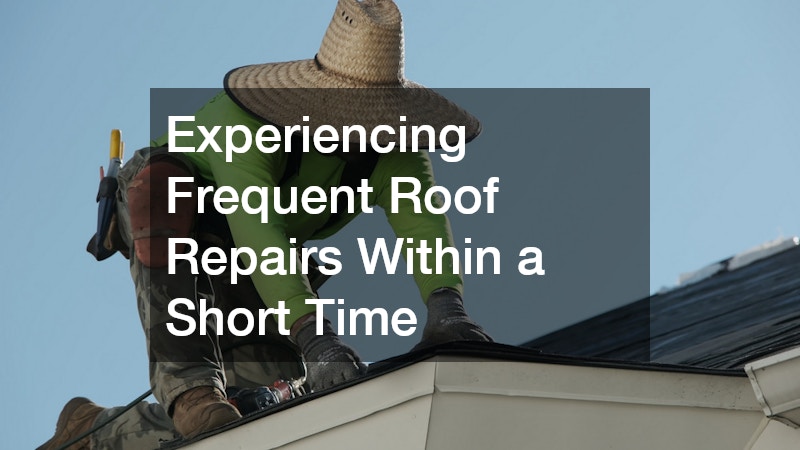
If you find yourself calling for a “quick fix” every time it rains, you are likely throwing good money after bad. A roof that requires constant maintenance is a roof that has failed. Patching one area often puts stress on the surrounding old shingles, leading to a “domino effect” of leaks.
Reputable roofing contractors will be honest with you when the cost of repairs begins to approach a significant percentage of the cost of a new roof. If you have repaired three different leaks in the last two years, the structural integrity of the entire plane is likely compromised. Transitioning from a repair mindset to a replacement mindset allows you to reset the clock on your home’s protection and often comes with a much more robust warranty than a series of small, disconnected patches.
Realizing Your Roof Is Reaching the End of Its Lifespan
Everything has an expiration date, and roofs are no exception. A standard architectural shingle roof is designed to last between 20 and 25 years, depending on the climate and the quality of the installation. If you know your roof was installed two decades ago, you are in the “red zone” for failure, even if you don’t see active leaks yet.
A proactive roofing company can perform a “lifespan audit” to see how much life is left in your materials. This involves checking the flexibility of the shingles and the condition of the pipe boots and chimney flashing. Replacing a roof on your own timeline is much less stressful and often cheaper than replacing it during an emergency when water is pouring into your kitchen. Being aware of the age of your roof allows you to budget for the expense and choose the best materials without the pressure of an active leak.
Seeing Increased Energy Bills Without a Clear Explanation
If your heating and cooling costs have spiked but your usage habits haven’t changed, the culprit might be over your head. A roof does more than block rain; it regulates temperature through ventilation. If your attic isn’t venting correctly, heat builds up in the summer, baking the shingles from the inside out and forcing your AC to work overtime. In the winter, poor insulation and venting lead to ice dams.
Many residential roofing companies now focus on “cool roof” technology and advanced ventilation systems. If your roof is failing, it may be losing its reflective properties or its ability to “breathe.” By upgrading to an energy-efficient roofing system, you don’t just protect your home from water; you create a thermal barrier that can lower your monthly utility bills by 10% to 15%. This makes a new roof not just a repair expense, but a long-term investment in your home’s efficiency.
Addressing the Impact of Compromised Attic Ventilation
While the exterior of your roof bears the brunt of the weather, its performance is equally dependent on what is happening underneath the shingles. Proper attic ventilation is the “lungs” of your home, allowing air to flow from the soffit vents to the ridge vents. If this airflow is blocked—either by insulation or by a poorly designed roofing system—moisture can build up in the attic. This leads to “latent” damage, where the underside of the roofing deck begins to rot or develop mold, even without an active rain leak.
Consulting with a roofing company that understands the science of airflow is essential for long-term protection. They can determine if your attic is “short-circuiting” or if you have enough net-free ventilating area to prevent heat from warping your shingles during the summer months. In colder climates, this ventilation is what prevents ice dams; by keeping the roof deck at a uniform temperature, you prevent snow from melting and refreezing at the eaves, which can force water up under the shingles. A roof that breathes is a roof that lasts, and addressing ventilation issues today is the best way to ensure your new shingles reach their full manufacturer-rated lifespan.
Planning Major Home Repairs That Involve Multiple Systems
Sometimes, the sign that you need a roofer is not found on the roof itself, but in your broader home improvement plans. If you are planning an addition, a solar panel installation, or a major interior remodel, you must ensure the roof is up to the task. There is nothing more frustrating than finishing a beautiful kitchen remodel only to have it ruined by a roof leak six months later.
In these large-scale scenarios, you will likely be working with a general contractor who oversees multiple trades. They will coordinate with roofing specialists to ensure that the “envelope” of the house is sealed before any interior work begins. Integrating roofing work into a larger project ensures that the flashing between new and old structures is seamless and that the entire home is protected as a single unit.
In conclusion, your roof is the most important component of your home’s exterior. It is a complex system that requires regular observation and professional care. By staying vigilant for signs of shingle loss, structural sagging, biological growth, and rising energy costs, you can address problems while they are still manageable. Remember that a roof leak is not just a nuisance; it is a threat to the structural integrity and health of your entire home. When in doubt, consult with a professional who can provide the expertise and craftsmanship necessary to keep your home dry, safe, and efficient for decades to come. Don’t wait for the drip—listen to what your roof is telling you today.