Finding a few ants in your kitchen or bathroom may not seem like a serious problem at first. However, those few insects can quickly turn into a steady trail if they have discovered food, water, or shelter inside your home. Ant colonies can contain large numbers of workers, and simply removing the ants you can see may not solve the underlying problem.
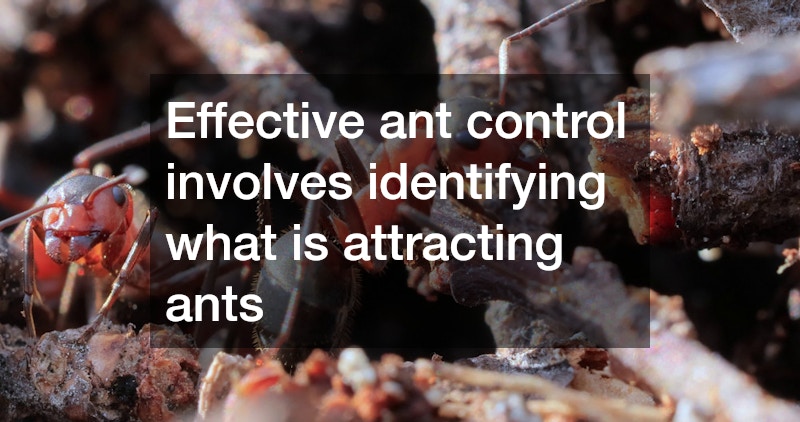
Effective ant control involves identifying what is attracting ants, locating where they may be entering, cleaning up food and moisture sources, and addressing the colony itself. Understanding how to respond can help homeowners reduce current activity and make their homes less inviting to future invasions.
Start by Identifying Where the Ants Are Traveling
When ants enter a home, they often follow consistent paths between their colony and a source of food or water.
Instead of immediately wiping away every ant you see, take a moment to observe where they are traveling. Follow the trail toward windows, doors, baseboards, cabinets, plumbing penetrations, or cracks in walls.
This can help you identify possible entry points and determine which areas need the most attention.
Different ant species may also behave differently, so proper identification can be an important part of ant control. Some ants nest outdoors and travel inside for food, while others may establish colonies within walls, damaged wood, or other parts of the home.
Remove Accessible Food Sources
Ants are persistent when they discover a reliable source of food.
Crumbs beneath appliances, spills on countertops, open packages in cabinets, pet food, and sticky residue can all attract ants. Even very small amounts of food may be enough to keep a trail active.
Clean countertops, sweep or vacuum floors, and pay particular attention to areas beneath stoves, refrigerators, tables, and cabinets. Store sugar, cereal, snacks, flour, and other dry foods in sealed containers when possible.
Pet food should also be managed carefully. Leaving bowls of food out for long periods can provide ants with an easy meal.
Good sanitation will not necessarily eliminate an established colony, but it is an important part of any ant control strategy because it reduces the resources available inside your home.
Address Moisture Problems
Food is not the only thing ants may be searching for. Water can also attract them indoors, particularly during hot or dry weather.
Check beneath sinks, around toilets, near appliances, and in basements for signs of leaks or excess moisture. Condensation around pipes can also create damp conditions that certain ants find attractive.
Repair leaking faucets and pipes when necessary, and avoid allowing water to remain pooled around sinks or other fixtures.
Moisture problems can also contribute to additional household issues, so fixing them can provide benefits beyond reducing ant activity.
Clean Ant Trails Properly
Ants often communicate with other members of their colony using chemical trails. Once workers discover food, they can leave behind scent signals that help additional ants follow the same route.
Removing visible ants without cleaning the trail may therefore allow others to continue using it.
Wipe down affected countertops, floors, baseboards, and other surfaces with an appropriate household cleaner. Pay attention to the entire route rather than cleaning only the spot where ants were feeding.
Removing food residue and scent trails can help disrupt their established path and support your broader ant control efforts.
Seal Possible Entry Points
Ants can enter through extremely small openings, making it difficult to completely prevent access. Still, sealing obvious gaps can reduce the number of pathways available.
Inspect around doors, windows, utility lines, plumbing penetrations, foundations, and exterior siding for cracks or gaps.
Weatherstripping and appropriate sealants may help close certain openings. Damaged screens should also be repaired.
Keep in mind that sealing an entry point does not necessarily eliminate an existing colony. Ants may simply find another route if the conditions attracting them remain unchanged.
For that reason, exclusion works best when combined with sanitation and other forms of ant control.
Avoid Relying Only on Killing Visible Ants
Spraying or crushing the ants you can see may provide immediate satisfaction, but those individuals typically represent only a small portion of the colony.
Worker ants leave the nest to search for food, while the queen and many other ants remain protected elsewhere.
This is why an ant problem may seem to disappear temporarily only to return a few days later.
Effective treatment often focuses on the colony rather than individual workers. Depending on the species and location of the nest, professional treatment methods may be more effective than repeatedly treating visible trails.
Be Careful With DIY Treatments
There are many ant sprays, baits, and other products available to homeowners. Some can be useful when applied correctly, but results depend on the type of ant, the product, and the location of the colony.
Using multiple products without a plan can sometimes make treatment more difficult. Certain sprays may cause ants to avoid one area and begin traveling through another part of the home.
Always read and follow product labels carefully. If you are unsure what species of ant you are dealing with or where the colony is located, professional ant control may be the safer and more effective option.
Check Outside Your Home
Many indoor ant problems begin outdoors.
Inspect the exterior of your home for ant trails, nests, vegetation touching the building, and sources of moisture. Tree branches and shrubs that contact the structure can give ants additional routes indoors.
Firewood, landscaping materials, and other objects stored directly against the foundation may also create favorable conditions.
Trimming vegetation and keeping exterior areas maintained can help reduce the opportunities ants have to reach your home.
Know When to Call a Pest Control Professional
A small, occasional ant problem may be manageable with sanitation and basic prevention. Persistent or widespread activity, however, may indicate a larger colony or a nest located somewhere difficult to reach.
You should consider professional help if ants repeatedly return despite your efforts, appear in multiple rooms, emerge from walls or electrical outlets, or seem to be associated with damaged wood.
A pest control professional can identify the species, determine likely nesting areas, and develop an ant control approach based on the specific conditions in and around your home.
Prevent Future Ant Problems
Preventing ants requires ongoing attention rather than a one-time cleanup.
Keep food properly stored, clean spills quickly, manage pet food, repair moisture problems, and inspect your home’s exterior periodically for new gaps or ant activity.
It is also helpful to keep vegetation trimmed away from the house and avoid creating damp, sheltered areas near the foundation.
Take Action Before the Problem Grows
An ant invasion can escalate quickly when a colony has easy access to food, water, and shelter. Addressing the problem early can make it easier to bring activity under control.
By cleaning food sources, reducing moisture, sealing entry points, monitoring trails, and using appropriate ant control methods, homeowners can make their properties much less attractive to ants.
When the problem continues despite these efforts, professional assistance can help target the colony and create a more complete strategy for keeping ants out of your home.