Mold can develop anywhere moisture is present, including bathrooms, basements, kitchens, attics, crawl spaces, and areas affected by leaks or flooding. Small amounts of surface mold may sometimes be manageable, but larger or recurring problems often require professional attention.
A mold remediation contractor follows a structured process designed to identify the source of moisture, contain the affected area, remove contaminated materials when necessary, and reduce the likelihood that mold will spread during cleanup. Understanding how remediation works can help homeowners know what to expect if mold is discovered in the home.
Identifying the Source of Moisture
Mold growth is usually a symptom of a moisture problem.
Before remediation begins, professionals try to determine why the area became damp in the first place. Common causes include roof leaks, plumbing leaks, condensation, poor ventilation, flooding, or water entering through the foundation.
Addressing the moisture source is critical. If the underlying problem remains, mold may return even after contaminated materials are cleaned or removed.
A mold remediation contractor may work with plumbers, roofers, HVAC professionals, or other specialists if repairs are needed before or during the project.
Inspecting the Affected Area
The next step is determining how much of the property is affected.
Visible mold may be only part of the problem. Moisture can travel behind walls, beneath flooring, or into insulation where growth is not immediately obvious.
Professionals may inspect walls, ceilings, floors, cabinets, attics, crawl spaces, and other nearby areas.
Moisture meters and other tools can help identify damp building materials that deserve closer attention.
The goal is to understand the extent of the problem before beginning removal.
Establishing Containment
One of the most important parts of mold remediation is preventing spores and contaminated dust from spreading into unaffected parts of the home.
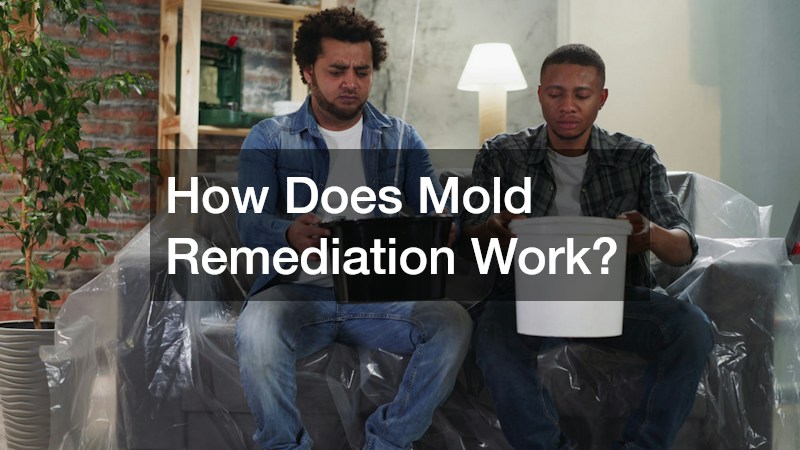
A mold remediation contractor may isolate the work area using plastic sheeting and other barriers.
Depending on the size and location of the project, negative air pressure may also be used. This helps direct air into the contained area rather than allowing contaminated air to move outward.
Doors, vents, and other openings may be covered temporarily during the process.
Containment becomes especially important when drywall, insulation, flooring, or other materials need to be removed.
Using Protective Equipment
Workers performing mold remediation typically use personal protective equipment appropriate for the conditions.
This may include gloves, protective clothing, eye protection, and respiratory protection.
The specific equipment depends on the size and severity of the contamination.
Protective measures help reduce direct exposure while workers disturb materials that may contain mold.
Homeowners and pets may also be asked to remain outside the work area until certain stages of the project are complete.
Removing Damaged Porous Materials
Some materials can be cleaned, while others may need to be discarded.
Porous materials such as drywall, insulation, carpeting, ceiling tiles, and certain wood products can absorb moisture and allow mold to grow below the surface.
When contamination is extensive, removal may be the more practical option.
A mold remediation contractor carefully removes affected materials while containment measures are in place.
Debris is generally bagged or otherwise contained before it is transported out of the building so mold-containing dust is less likely to spread.
Cleaning Remaining Surfaces
Materials that do not need to be removed are cleaned using methods appropriate for the surface.
Hard, nonporous materials can often be cleaned more thoroughly than highly absorbent ones.
Professionals may use specialized cleaning products, HEPA-filtered vacuums, wiping methods, or other techniques to remove visible growth and contaminated dust.
The goal is physical removal rather than simply covering mold with paint or another coating.
Painting over active mold does not address the underlying contamination or moisture source.
Using HEPA Filtration
HEPA filtration is commonly used during mold remediation.
HEPA filters are designed to capture very small airborne particles, including many of the particles disturbed during cleanup.
Air scrubbers equipped with HEPA filters may operate inside the contained area while work is being performed.
HEPA vacuums can also be used to clean surfaces after contaminated materials have been removed.
A mold remediation contractor may continue air filtration during multiple stages of the project depending on site conditions.
Drying the Area Thoroughly
Removing mold without drying the structure can allow the problem to return.
After contaminated materials are removed and surfaces are cleaned, the area needs to be dried.
Professionals may use dehumidifiers, air movers, or other drying equipment to reduce moisture in building materials and indoor air.
Moisture readings can help determine whether materials have reached acceptable levels before reconstruction begins.
This stage is particularly important after flooding, plumbing failures, or other significant water events.
Cleaning Dust and Debris
Remediation creates dust and debris even when containment is used.
Once the main removal work is complete, professionals clean the work area carefully.
HEPA vacuuming and damp wiping may be used on floors, walls, framing, and other surfaces.
Tools and equipment may also need to be cleaned before being removed from the contained space.
The mold remediation contractor may perform several rounds of cleaning to reduce residual dust and material left behind.
Evaluating Whether Additional Testing Is Needed
In some situations, homeowners may choose to have the property evaluated before or after remediation by an independent professional.
Testing is not always necessary for every mold problem, but it may be useful in complex situations, disputes, or projects involving extensive contamination.
Some property owners also request post-remediation verification to confirm that the work area has been cleaned appropriately.
The need for testing depends on the circumstances, the size of the project, and recommendations from qualified professionals.
Reconstructing Removed Areas
Mold remediation and reconstruction are sometimes separate stages.
If drywall, insulation, flooring, trim, or other building materials were removed, they may need to be replaced after the affected area is clean and dry.
Some mold remediation contractor companies also provide reconstruction, while others focus exclusively on remediation.
Before rebuilding, it is important to confirm that the original moisture problem has been corrected.
Otherwise, new materials could eventually experience the same damage.
Preventing Mold From Returning
Long-term prevention depends on controlling moisture.
Homeowners should repair plumbing and roof leaks quickly, use exhaust fans in bathrooms and kitchens, manage indoor humidity, and investigate condensation when it appears repeatedly.
Basements and crawl spaces may require additional moisture-control measures depending on local conditions.
Gutters and drainage systems should also direct water away from the foundation.
Mold can grow again whenever suitable moisture conditions return, making prevention an important part of the remediation process.
Watch for Signs of Hidden Moisture
Visible mold is not the only warning sign homeowners should watch for.
Musty odors, bubbling paint, warped flooring, recurring water stains, damp drywall, or unexplained humidity can all indicate moisture problems.
These conditions deserve attention even if mold is not immediately visible.
A professional evaluation may be especially helpful when there has been a past leak or flood.
Professional Remediation Focuses on the Entire Problem
Effective mold remediation involves more than spraying a cleaning product on visible growth.
A mold remediation contractor typically investigates the source of moisture, contains the affected area, removes materials that cannot be salvaged, cleans remaining surfaces, filters the air, and dries the structure before reconstruction.
The most important long-term step is correcting the moisture condition that allowed mold to grow in the first place.
By addressing both the contamination and its underlying cause, homeowners can reduce the chance of recurring problems and restore affected areas more effectively.