Keeping the exterior of a home clean can improve curb appeal, remove buildup, and help exterior surfaces look better for longer. Two common cleaning methods are soft washing and pressure washing. Although they may seem similar, they use very different levels of water pressure and are designed for different types of surfaces.
Understanding how each method works can help homeowners choose the safest and most effective option for a particular cleaning project. In some cases, power washing or pressure washing may be the right solution, while other surfaces are better suited for a gentler soft-washing approach.
What Is Pressure Washing?
Pressure washing uses highly pressurized water to remove dirt, grime, mud, mildew, and other buildup from durable exterior surfaces.
A pressure washer forces water through a narrow nozzle at high speed. This concentrated stream can break apart stubborn residue that would be difficult to remove with a standard garden hose.
Pressure washing is commonly used on surfaces such as concrete driveways, sidewalks, patios, and some masonry materials. These hard surfaces can generally tolerate greater force than more delicate exterior materials.
The exact amount of pressure should still be selected carefully. Too much pressure can damage even durable materials when the equipment is used incorrectly.
What Is Soft Washing?
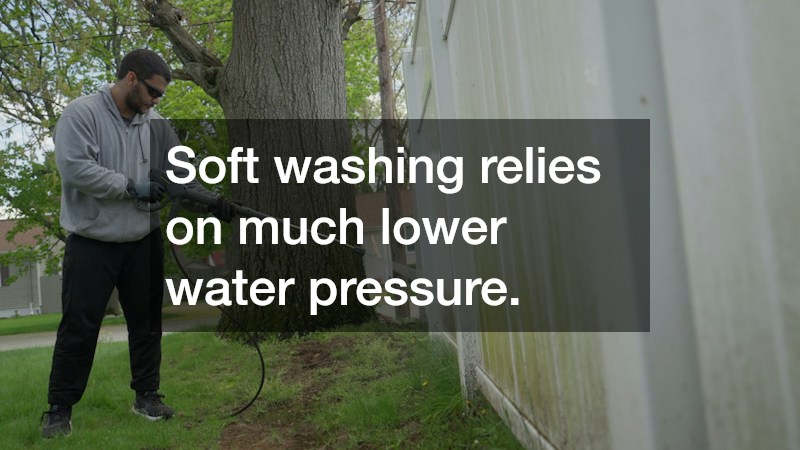
Soft washing relies on much lower water pressure.
Instead of using force alone to remove buildup, soft washing typically combines water with specialized cleaning solutions designed to loosen or treat organic growth, stains, dirt, and other contaminants.
Because the pressure is significantly lower, this method can be more appropriate for surfaces that could be damaged by aggressive spraying.
Soft washing is frequently considered for roofing, siding, painted surfaces, and other exterior materials where high pressure could create problems.
The cleaning solution does much of the work, allowing contaminants to be treated without relying on the intense force associated with power washing.
The Biggest Difference Is Water Pressure
The most obvious distinction between these methods is the amount of pressure being applied.
Pressure washing relies primarily on force. Soft washing relies more heavily on cleaning agents and lower-pressure rinsing.
This difference matters because exterior materials vary significantly in durability. Concrete may tolerate pressure that could damage siding or roofing materials.
Choosing the wrong method can lead to chipped paint, damaged shingles, loosened siding, or water being pushed into areas where it does not belong.
Professional exterior cleaners evaluate the material before deciding how much pressure is appropriate.
Which Surfaces Are Good for Pressure Washing?
Pressure washing is typically best suited for hard, durable surfaces.
Concrete is one of the most common examples. Driveways and sidewalks can accumulate tire marks, mud, algae, dirt, and other stains over time. The stronger water pressure can help remove this buildup efficiently.
Certain patios, retaining walls, and other masonry surfaces may also be candidates for pressure washing.
Even on durable surfaces, however, technicians must consider factors such as cracks, age, surface coatings, and existing damage.
Professional power washing is not simply about selecting the highest possible pressure. Proper cleaning requires choosing settings that are strong enough to clean without unnecessarily damaging the surface.
Which Surfaces Are Better for Soft Washing?
More delicate exterior materials often benefit from soft washing.
Roofing is one important example. Asphalt shingles can lose protective granules or become damaged when exposed to excessive pressure.
Certain types of siding, painted exterior surfaces, stucco, and decorative materials may also require a gentler approach.
Soft washing allows cleaners to address organic growth and staining while reducing the amount of physical force applied to the material.
The specific cleaning solution and technique should still be appropriate for the surface being treated. Professionals can adjust their methods depending on the type and condition of the material.
Soft Washing Can Target Organic Growth
Mold, mildew, algae, and similar growth can be difficult to address through water pressure alone.
Pressure washing may remove visible buildup from the surface, but soft-washing solutions can be designed to treat the organisms responsible for the discoloration.
This can be especially helpful on roofs and siding where dark streaks or green growth may develop over time.
After the cleaning solution has had sufficient time to work, the surface is rinsed at lower pressure.
This process is one reason homeowners may see soft washing recommended for surfaces where organic growth is a major concern.
Pressure Washing Can Handle Heavy Buildup
There are situations where stronger pressure is useful.
A concrete driveway covered with years of dirt, mud, grime, or stains may require more mechanical cleaning power than soft washing alone can provide.
Similar conditions may exist on sidewalks, hardscape surfaces, and other durable outdoor areas.
This is where professional power washing can be especially effective. The combination of appropriate equipment, pressure settings, and technique can remove buildup more quickly than manual scrubbing.
However, operators still need to control the distance and angle of the spray to create an even result.
Both Methods Can Cause Damage if Used Incorrectly
Neither soft washing nor pressure washing is completely risk-free.
Using excessive pressure can damage exterior materials, while using an inappropriate cleaning solution can discolor surfaces, harm surrounding plants, or affect certain finishes.
Water can also enter gaps around windows, doors, vents, or siding when sprayed incorrectly.
Professionals generally inspect the cleaning area before beginning work. They can identify vulnerable materials, protect nearby landscaping, and determine whether repairs should be made before cleaning.
Experience is particularly valuable when multiple surfaces are being cleaned during the same project.
Is Power Washing the Same as Pressure Washing?
The terms are often used interchangeably, although there can be technical differences depending on the equipment being discussed.
Traditional pressure washing uses pressurized water, while some definitions of power washing specifically refer to equipment that also uses heated water.
Heated water can help break down certain types of grease or stubborn buildup.
For most homeowners, however, contractors may use the terms more generally when describing high-pressure exterior cleaning services. Asking a company what equipment and methods it actually uses can provide a clearer understanding of the service.
How Do You Choose the Right Method?
The surface being cleaned should be the biggest factor.
Hard surfaces such as concrete may be well suited for pressure washing, while roofs and certain siding materials often require a gentler method.
Homeowners should also consider the type of buildup involved, the age of the material, and whether there is existing damage.
If several areas around the property need cleaning, professionals may use both techniques during the same visit.
Choose the Method That Protects the Surface
Soft washing and pressure washing can both be effective when used appropriately. The difference comes down to how the cleaning is accomplished and how much force the surface can safely handle.
Pressure washing is useful for durable materials and stubborn buildup, while soft washing provides a gentler approach for more vulnerable surfaces and organic growth.
Before beginning a power washing project, homeowners should consider the material being cleaned rather than focusing only on how dirty it looks. Using the right method can help achieve a cleaner exterior while reducing the risk of unnecessary damage.